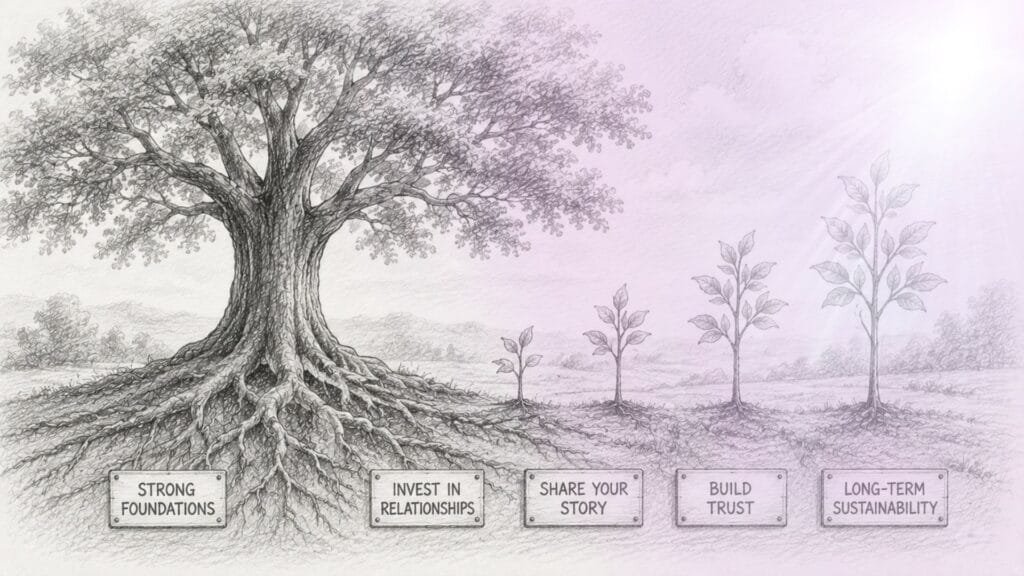
Why Community Organisation Sustainability Depends on More Than Grants
Funding will always matter, but community organisation sustainability depends on much more than winning the next grant. Every successful funding application has an end date, and when that funding finishes, the same question returns: what happens next?
The strongest community organisations, charities and CICs are beginning to think differently. They are investing in visibility, relationships and digital assets that continue working long after a grant has been spent. That shift does not replace funding. It makes every pound of funding go further.
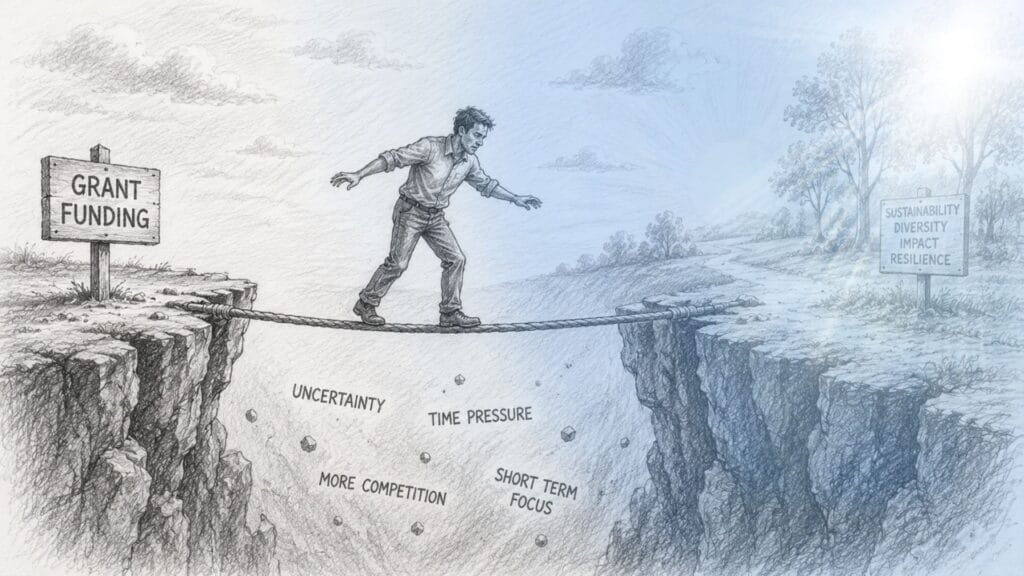
Why is relying only on grants becoming a bigger risk?
Grants should support growth, not become the entire business model.
Competition for funding is increasing, and funders increasingly want to see long-term resilience alongside community impact. Organisations that rely on a single funding source are often more vulnerable when priorities change.
When every new project depends on the next grant, it’s easy to spend more time writing applications than building awareness, partnerships and lasting income. The strongest community organisations use grants to grow, while also investing in visibility and relationships that continue creating opportunities long after the funding ends.
How can your organisation stay visible between funding rounds?
Your community does not stop needing your services because a funding application is in progress.
Staying visible throughout the year helps people remember who you are, what you do and why your work matters. It also means potential funders, partners and volunteers can see an active organisation rather than one that only appears when funding is available.
A simple, regularly updated website, consistent social media and real stories about your impact all help build trust over time. That visibility often creates opportunities that never appear on a grant applic
Which digital assets keep working even when you’re busy?
The best digital assets continue supporting your organisation while you focus on delivering services.
- A clear website that explains your mission, services and impact.
- Case studies showing real outcomes from your work.
- News articles and blogs that demonstrate expertise and community involvement.
- Simple contact forms that make it easy for partners, volunteers and supporters to get in touch.
- Email newsletters that keep your community engaged throughout the year.
Unlike a social media post that disappears after a few days, these assets continue helping people discover your organisation through search engines, AI-powered search and recommendations months or even years later.
If your website is confusing, outdated or difficult to navigate, you may be missing opportunities without even realising it.
Why do partnerships matter just as much as funding?
Strong partnerships create opportunities that money alone cannot buy.
Local businesses, councils, schools, healthcare providers and other voluntary organisations all have audiences, knowledge and resources that can strengthen your work. When people regularly see your organisation collaborating with trusted partners, confidence naturally grows.
Partnerships can lead to referrals, shared projects, sponsorship, venue access, volunteer recruitment and introductions to future funders. Those relationships often begin simply because someone understands what your organisation does and trusts the people behind it.
That is another reason your online presence matters. A professional website gives potential partners confidence before they ever arrange a meeting.
Does a simple website really make a difference?
Community organisations sometimes assume they need a large, feature-packed website. In reality, most visitors simply want quick answers.
- Can you help me?
- How do I get involved?
- Can I donate?
- Who have you helped?
- How do I contact you?
Strong websites make it easier for supporters, volunteers and partners to take action. Guidance from NCVO regularly highlights the importance of effective digital communication in helping charities build stronger relationships and increase their impact.
What does long-term community organisation sustainability actually look like?
Sustainable organisations build several forms of resilience instead of relying on one source of income.
That could include:
- Grant funding alongside trading income where appropriate.
- Active partnerships with local organisations and businesses.
- A website that continually attracts supporters, volunteers and referrals.
- Consistent communication that keeps the community engaged throughout the year.
- Clear evidence of impact that supports future funding applications.
None of these replace grants. Together, they make grants more effective because they build an organisation that continues moving forward regardless of individual funding decisions.
Building resilience starts long before the next funding application
Every community organisation wants to create lasting impact. The organisations that achieve it most consistently invest in visibility, trust and relationships all year round, not just when funding applications open.
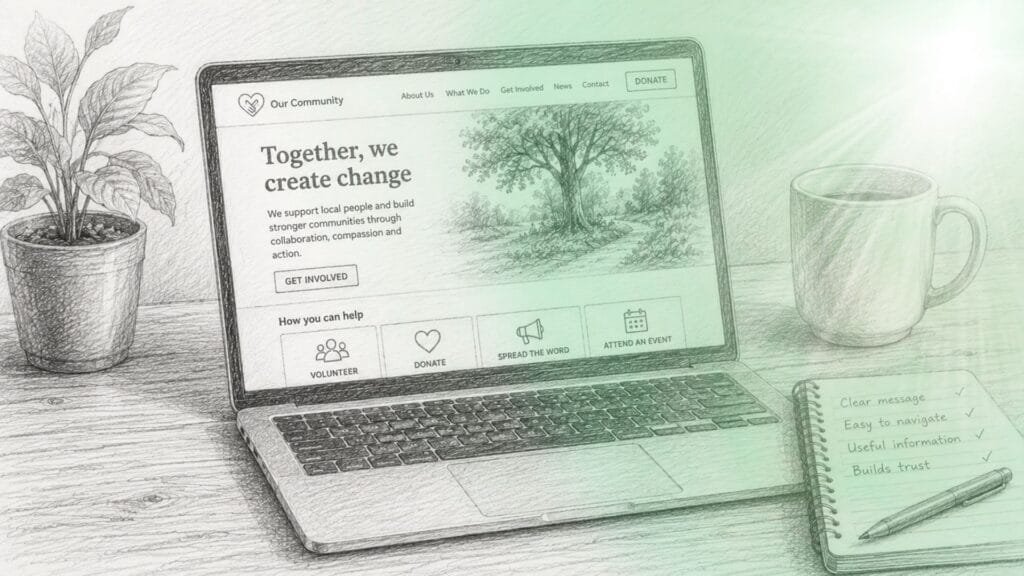
A clear, professional website helps supporters, volunteers and partners understand your mission quickly and builds confidence in your organisation. If your current site no longer reflects the quality of your work, it could be holding you back. If you are reviewing your site, explore our website design for charities and community organisations.
Explore JigiWeb’s website design services to see how a simple, easy-to-manage website can support long-term sustainability.